
Journaling
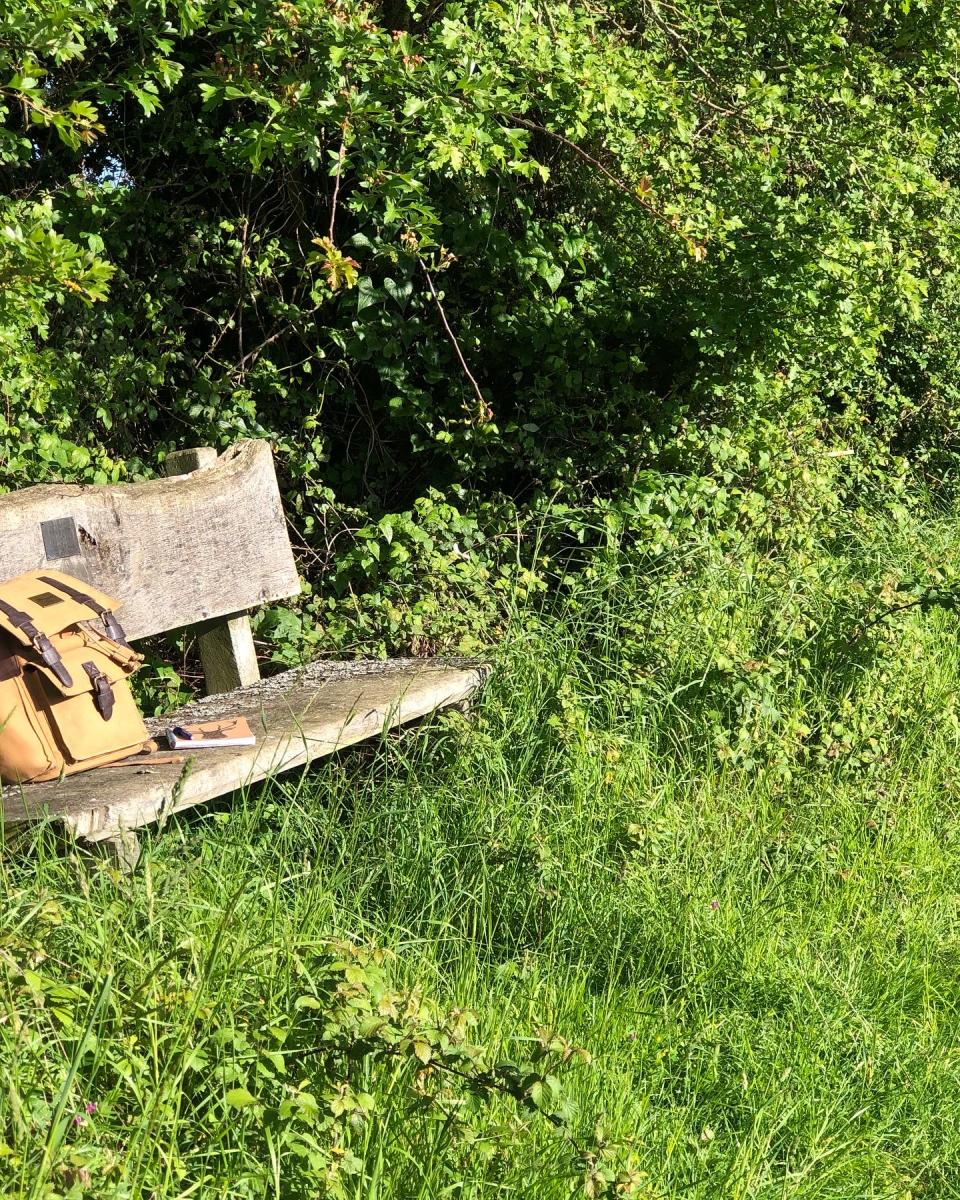
Journaling allows us to connect with the right hand side of our brain. The creative, child-like, spontaneous Inner Child that lives inside us. This Inner Child often becomes hidden as they are supressed due to the pressure of society and expectations placed upon us from education and childhood. It is a part of us that feels and wonders and if we can connect with this small person, will bring us delight and joy.
The intellectual language of adults keeps us seperate from our Child Heart. However, when we draw and write and express our feelings through art, we are speaking the language of our Inner Child. In order to survive within our world, we all deny the Child within us, to one degree or another. Our world does not feel safe for that sensitive, vulnerable part of ourselves. But the Inner Child is at the core of our being. It brings us enthusiasm and energy. None of us can be whole, happy adults without bringing the Inner Child into our lives and thereby healing it.
Journaling in Nature helps us connect to our 'inner wild child' and enjoy the freedom of being outdoors. It also allows us to let go of the 'expert' part of us who strives to be perfect, which can lead to anxiety and 'imposter syndrome'. Instead we can explore and gather. I often gather wild flowers when I am out walking. We can gaze at the wonder of nature, whilst we explore and become child-like ... a dandelion blowing gently in the wind, feel the tickly sensation of grass against our legs as we walk through an open field. Our thoughts flow more easily as we get lost in the beauty around us.
Journaling also helps us:-
How to start journaling
We can feel a bit overwhelmed about how to start journaling so a good way to start is with journaling prompts.
- Gratitude – 1-3 things we are grateful for every day. Helps encourage a positive mindset and shift us from a place of ‘fear’ to a place of ‘love’.
- Affirmations – when we find that negative thought and switch it to a more empowering thought we start believing it. Some of my favourite affirmations during lockdown have been “I am safe” “I am protected” “I am exactly where I am meant to be” “the Universe has my back”. I say these to myself a lot and also tap on these too.
Push that ‘inner mean girl’ down and become your own ‘cheerleader’.
- Visions or Goals – write down your goals and anything you are working toward. Get that vision out onto paper and write it down every day.
- Intention - what is my intention for the day. This is if we journal at the start of the day. This is not our ‘To Do List’ this is Q. how do I want to feel, Q. how do I want my day to look? Our To Do List can send us into ‘flight or flight’ so that To Do List can be there but we want to operate from the ‘rest and digest’ part of the nervous system. So this might be ‘to be kind and compassionate to myself or others today’ that might be ‘to move my body and nourish my body with healthy food’ or ‘to reach out and connect’ so it’s more coming back to self-care and how I want to show up and nourishing ourselves.
- Commitment – 3 things I want to get done. So you might have a To Do List with 20 things on but pick 3 things and put them in your journal so you set yourself up for success rather that failure with a To Do List that you will never achieve in a day. If you do more it’s a win. But the idea is to set yourself up to win every single day. You could ask yourself Q. Who do I want to be today and how does she show up? So, every single day try and take steps to be who you want to be? Q. What do I want to learn today? This is a good question during lockdown as it is keeping our brain active.
- If journaling at the end of the day, ask yourself what went well that day?
Giving ourselves prompts and questions about how we are feeling will encourage journaling. This will lead to self-reflection, which will lead into free writing.
Questions to ask yourself before journaling?
- When is your time to journal? I find I want to journal after meditation.
- How long will it take? Will it be a short 10 mins session or 30 mins? Set time aside.
- Try and be religious with it and make it become a ritual whether that’s morning or evening. After meditation is a really good time as you have relaxed the ‘monkey mind’ and got more clarity of how you want your day to look and how you want to feel and in ‘flow state’ and things come out.
- Stack it with another habit but if you miss a day don’t beat yourself up!
- Find your own way. There is no right or wrong way. Use this advice but tailor it to your lifestyle.
Remember it’s your personal journal and nobody is going to read it. It’s about coming out of our mind and connecting with our heart and body!
Once we have started to use journaling prompts, we might find that journaling flows more easily. I would encourage you to try this after mediting when we are in a relaxed, free state. Journaling is very therapuetic. I began journaling way before starting my counselling journey, by keeping diaries. Something we often start in childhood. I found this helped me stay sane as it was a particularly challenging time and I now realise why.
Happy Journaling everyone!!


